
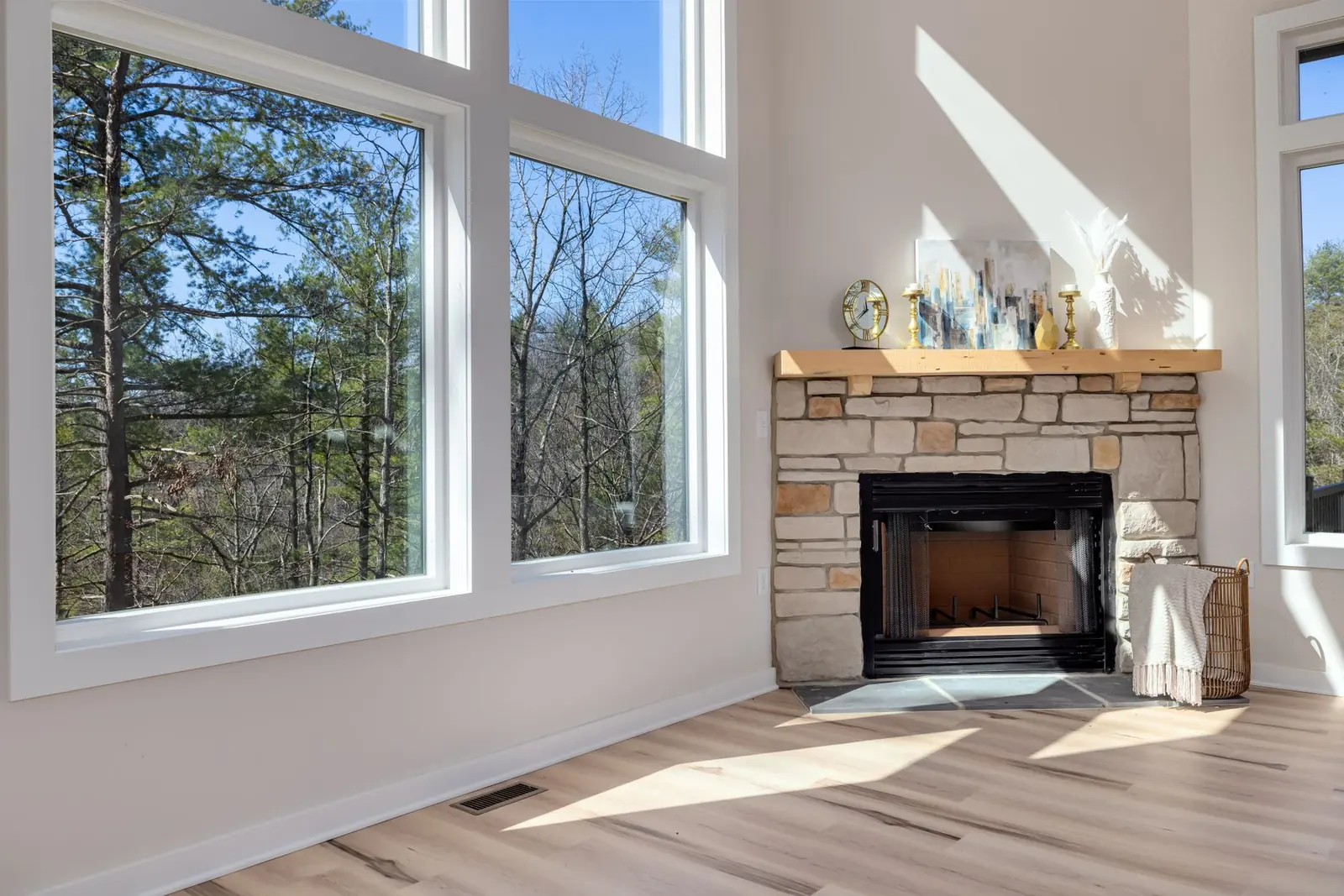
Residential window tinting cuts heat and glare without covering the window at all. A thin film is applied to the inside of the glass, and the view, the light and the look of the house stay much the same. It works well on windows you’d rather not cover, like transoms, picture windows and tall glass over a staircase.
What window film does
A good film will:
- Rejects solar heat, so rooms on the sunny side of the house stay more comfortable.
- Blocks nearly all UV, which slows fading of floors, rugs and furniture.
- Reduces glare on TVs and computer screens.
- Adds daytime privacy with reflective or frosted films.
- Holds glass together if it breaks, with thicker safety films.
Types of film
Heat-blocking window film ranges from nearly clear to darker and more reflective. Clear spectrally selective films reject a good share of heat without changing how the window looks. Privacy films come in frosted and decorative patterns for bathrooms, front doors and sidelights. We bring samples to the consultation so you can hold them against your own glass.
Film or shades?
Film is always on, so it handles heat and UV all day without anyone touching it. Shades can be opened and closed, and they add privacy at night, which film can’t do. Many of our customers use both: film on large glass that faces the sun and shades where they want privacy.
Frequently asked questions
Does window film reduce heat from the sun?
Yes. Solar control films reflect or absorb part of the sun's energy before it passes into the room, which lowers heat gain and evens out hot spots near the glass. How much depends on the film. Darker and more reflective films reject more heat, and spectrally selective films reject heat while staying fairly clear.
What is the best window film for blocking UV rays?
Most residential window films are rated to block about 99 percent of UV, including many clear films. UV is a major cause of fading in floors, rugs and furniture, so even a light film helps protect them. The choice between films usually comes down to how much heat, glare and tint you want.
Does window film make glass shatterproof?
No film makes glass unbreakable. Thicker safety and security films hold broken glass together so it doesn't scatter, which makes a window harder to get through and reduces injury from flying shards. Standard solar films are thinner and are chosen for heat and glare, not impact.